
Pastor Erik's Sometimes Dangerous Blog

Erik DiVietro
Teaching Pastor,
Bedford Road Baptist Church, 2004
Master of Divinity,
Liberty University, 2016
PhD in Bible Exposition,
Liberty University, 2022
Oddball Contrarian,
Since Birth (according to his parents)
Joel Watts and I don’t always see eye to eye on everything. We encountered each other through a third blogger, Jason Skipper, when Jason started a forum for revitalizing the Fundamentals called re:F. Joel runs in what most would consider a more liberal, more mainline doctrinal discussion than I do, although more often than not
Luke slights rulers he does not care for. He does it a lot actually. As I have been reading and researching through Luke, I have noticed this tendency. It is especially evident in chapter 3 of Luke’s gospel when he is describing the rulers of John the Baptist and Jesus’ day. 1. Luke always refer
The final genre I am going to write about is epistle. I think that by and large, the church gets the reading of an epistle pretty close to right. In a way, that is the problem with how we read everything else. We tend to apply the interpretation schemes we use for epistles to everything
There are four gospels in the Christian Scriptures. There were dozens of others circulated for the first couple centuries after Jesus, but only four stood up to the scrutiny of the early believers. Gospel is not modern biography. While scholars have shown that the gospels all conform to what the ancients would have considered bios
There is no more confusing genre in the Scriptures than the apocalyptic literature. In a literal sense, an apocalypse is the unveiling of the future. We have charged the word with violent overtones in our culture, although originally the word did not have a negative meaning at all. It simply means “unveiling” or “uncovering.” In
Of the first five books of the Hebrew Scriptures (Genesis, Exodus, Leviticus, Numbers, and Deuteronomy), a large proportion is legal code. Leviticus in particular focuses on a lot of “do this” and “don’t do that”. When reading these codes, you must remember that they were the “Law of the Land” and not simply moral codes
Hebrew narrative is generally poetic in nature, but it is not true poetry. It sets up poetry, but it has a different feel and rhythm. Often narrative sets the scenes between poetic portions. So, for example, we have a narrative passage that introduces and connects the various poetic portions of the Exodus story. (YHWH’s words
The Old Testament was composed almost entirely in Hebrew. First and foremost, Hebrew is the language of Scripture. In other words, Hebrew is a language quite literally formed around its use in the composition of sacred writings. This means that Hebrew has a unique structure and style. It is highly poetic, almost intentionally designed for
When we started the merger process between Grace Baptist Church and Heritage Baptist Church back in 2009, our elders and I did a lot of digging and found few resources to guide us. There just wasn’t much out there on church mergers, and what was out there was overwhelmingly negative. Despite this, we decided that
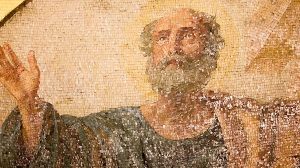
This Sunday, I mentioned that it was possible that the Apostle Paul’s father was a Gentile. This is a theory which cannot be absolutely proven, but it is based on two premises: 1. Paul was a Roman citizen. Three times in the book of Acts, Paul makes declarations of his citizenship: But Paul said to
